Hijiori Onsen: A Hot Spring Village in Yamagata That Still Feels Lived In
I’m Junko — a Tokyo-based writer, guide, and blogger exploring Japan through culture and travel.
I spent a few days in Hijiori Onsen, a hot spring village tucked away in the mountains of Yamagata Prefecture.
Getting There
Getting there was part of the experience. The nearest Shinkansen station is Shinjo, and I still remember my first impression when I stepped off the train: “Wait, is this a Shinkansen station?”
-600x800.jpeg)
After the crowds and constant movement of Tokyo, Shinjo felt remarkably quiet. For travelers coming from Tokyo, I would even recommend boarding at Ueno Station rather than Tokyo Station. The journey north feels much more relaxed from the very beginning.
From Shinjo, I boarded a shared shuttle bus serving Hijiori Onsen. The round-trip fare was 1,100 yen, and it provided an easy connection between the Shinkansen station and the hot spring village deep in the mountains.
-800x600.jpeg)
When booking my accommodation, I was asked how I planned to arrive. My impression was that the inns and shuttle service coordinate with one another so that passengers are distributed across the available buses.
A Taste of Traditional Ryokan Life
Founded more than 1,200 years ago, Hijiori is known as one of Japan’s traditional hot spring destinations. While many tourist areas in Japan are now crowded with international visitors, Hijiori still seemed to attract mostly Japanese travelers when I visited in September 2025. I saw very few international visitors during my stay, and English was not widely spoken.
Meals at my inn featured local mountain ingredients, including vinegared chrysanthemum petals, udo shoots, simmered butterbur, red fish, sukiyaki, and Yamagata’s famous imoni stew. Both breakfast and dinner were served in my room (what we call the “heya-shoku”), a style of hospitality that has become increasingly rare even in Japan. As someone traveling alone, I loved the privacy and the freedom to enjoy each meal at my own pace.
-1200x900.jpeg)
Because Hijiori is a small and traditional hot spring village, visitors with strict dietary requirements may face some challenges. I would strongly recommend contacting your accommodation in advance, as English communication may be limited.
A Morning Market Tradition
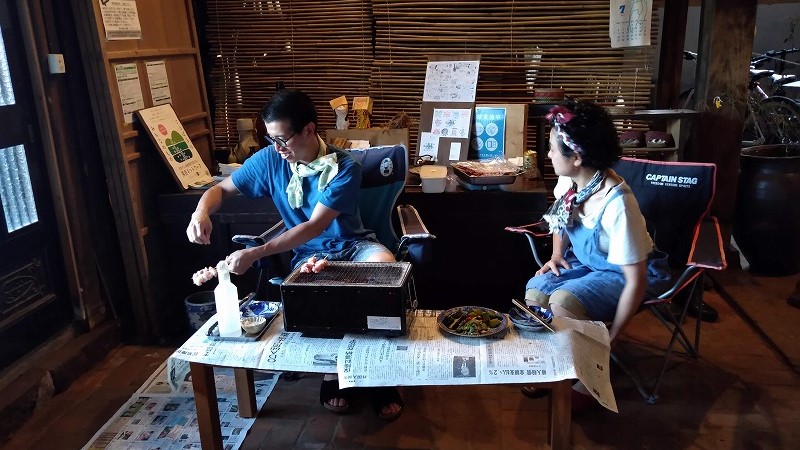
One of Hijiori’s most charming traditions is its daily morning market. Geared toward visitors staying in the hot spring village, the stalls are often run by local women selling homemade specialties such as sticky rice, pickles, plum preserves, and fuki miso.
One detail I found fascinating was that many vendors appear to charge the same prices for similar products. Perhaps this helps visitors avoid worrying about whether they bought from the “right” stall. It felt less like competition and more like a community working together.
While strolling through town in borrowed geta sandals, I stopped at a small shop selling Hotei Manju, a traditional steamed bun from the area filled with sweet red bean paste. The elderly woman running the shop had a wonderfully old-fashioned perm and a warm smile. She told me to come back the next morning when the shop opened at 8:00.
So I did.
On my last morning in Hijiori, I stopped by the shop just before heading back to the station. I could see activity in the back room and got the impression that the manju were being made right there on the premises. Before I knew it, I was leaving with a pack of freshly made manju. Looking back, I’m glad I listened to her advice.
A Few Other Onsen Options
One thing I remember clearly was walking to Caldera Onsenkan, a public bathhouse about 20 minutes from the hotel area. I had forgotten to bring my water bottle, and during the entire walk I did not see another person on foot. Everyone seemed to be traveling by car. The outdoor bath required a bit of climbing and effort, but the view and atmosphere made it worthwhile.
I also visited the town-operated public bathhouse. It felt less like a tourist attraction and more like a part of everyday life. There was no soap or shampoo provided—people simply rinsed off and entered the bath. Local grandmothers chatted comfortably in the small bathing area while visitors quietly shared the space.
-600x800.jpeg)
One of the warmest moments of my stay happened just before I left Hijiori Onsen. Rather than spoil the surprise, I’ll simply say that it reminded me why small hot spring villages like this are worth visiting.
-600x800.jpeg)
Months later, what stays with me most is the feeling of having briefly become part of village life. I remember the morning market, the conversations in the bathhouse, the quiet walk through the mountains, and the hospitality of the people who live there.
-600x800.jpeg)
If you’re looking for a place that still feels like a living hot spring community rather than a tourist destination, Hijiori Onsen may be exactly what you’re looking for.
Booking Information
Ryokan Website (Japanese only): http://www.bb-town.jp/ootomoya/
Rakuten Travel: https://travel.rakuten.co.jp/HOTEL/53416/53416.html
TripAdvisor: https://www.tripadvisor.com/Hotel_Review-g1120972-d1154008-Reviews-Hijiori_Onsen_Otomoya_Ryokan-Okura_mura_Mogami_gun_Yamagata_Prefecture_Tohoku.html
Hijiori Onsen Village: https://hijiori.jp/en/lodging/